Drywall Repair & Installation
Water-Damaged Drywall? What to Do First (and What Not to Do)
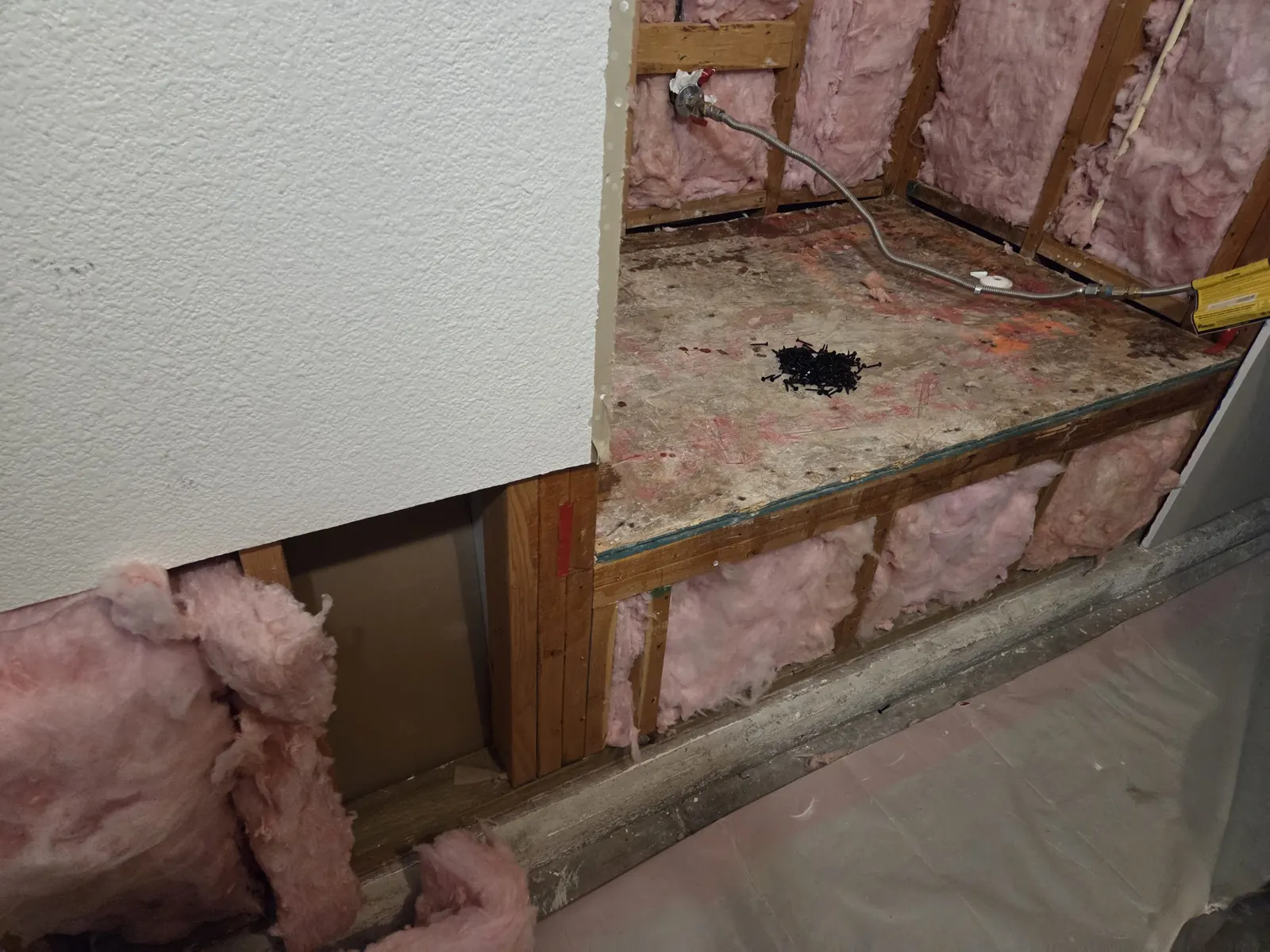
In Las Vegas, water damage rarely comes from rain. It comes from inside the house: an air conditioner condensate line that backs up, a water heater that starts leaking, a supply line under a sink, an upstairs shower pan, or a roof leak during one of our summer monsoon storms. Often the first sign is a brown stain on the ceiling, a bubbling spot of paint, or a door that suddenly will not close.
Here is what to do when you find it.
Step 1: Stop the water
Find and stop the source before anything else. Shut off the water to a leaking fixture, or turn off the main if you cannot find it. If the leak is from the AC, turn the system off and check the drain pan and condensate line. If water is near outlets or light fixtures, turn off the power to that area at the breaker.
Step 2: Document everything
Take photos and video of the stains, the source and anything damaged before you start cleaning up. If you plan to file an insurance claim, your adjuster will want to see the damage as you found it.
Step 3: Dry it out fast
Wet drywall, insulation and framing need to dry quickly to prevent mold, which can start growing in as little as 24 to 48 hours. For anything more than a small drip, call a water mitigation company. They use moisture meters, air movers and dehumidifiers, and they cut out wet materials so the wall cavity can dry.
One of our customers discovered a leak from their air conditioner while we were there quoting a paint job, days before hosting their own wedding at home. Mitigation was on site within hours, and our crew had the rooms rebuilt within two weeks.
What not to do
- Do not paint over a water stain. It will bleed right through regular paint, and you will be hiding a problem that may still be wet.
- Do not poke at a sagging ceiling. A ceiling holding water can come down suddenly. Keep people out from under it.
- Do not close up a wet wall. Drywall installed over damp framing or insulation traps moisture and invites mold.
Can the drywall be saved?
Sometimes. Drywall that got briefly wet, dried quickly and is still firm, with no sagging, crumbling or mold, may only need a stain-blocking primer and paint. Drywall that is soft, swollen, sagging, crumbling at the bottom edge or showing mold needs to be cut out and replaced. Ceiling drywall that held water almost always needs to be replaced.
How the repair works
Once the source is fixed and the area is confirmed dry:
- Damaged drywall and insulation are removed back to solid material.
- New drywall is hung and screwed to the framing.
- Seams are taped and finished with several coats of joint compound.
- Texture is matched to the rest of the wall or ceiling, whether that is orange peel, knockdown or smooth.
- The area is primed and painted to blend in with the surrounding surfaces.
Done right, you should not be able to find the repair once it is painted.
Working with insurance and restoration companies
Restoration companies hire Rhinos to rebuild after they finish drying out a property, and we work directly with homeowners going through the claim process. We can provide an itemized estimate for your adjuster.
"Rhinos Contracting will have your property back to original condition as if nothing happened." – American Maintenance & Restoration, Google review
Need water damage repaired?
Call or text (702) 580-9237 and we will come take a look. Learn more about our drywall repair and installation service.
Frequently asked questions
How long does water-damaged drywall take to repair?
A small ceiling or wall repair usually takes two to four days, because each coat of joint compound and texture needs time to dry before painting. Larger rebuilds can take one to two weeks.
Does homeowners insurance cover water-damaged drywall?
Sudden and accidental leaks, like a burst supply line, are often covered. Slow leaks and maintenance issues often are not. Check with your insurer, and document the damage before cleanup.
Can you match my ceiling texture?
Yes. We match orange peel, knockdown and smooth finishes so the repair blends in.